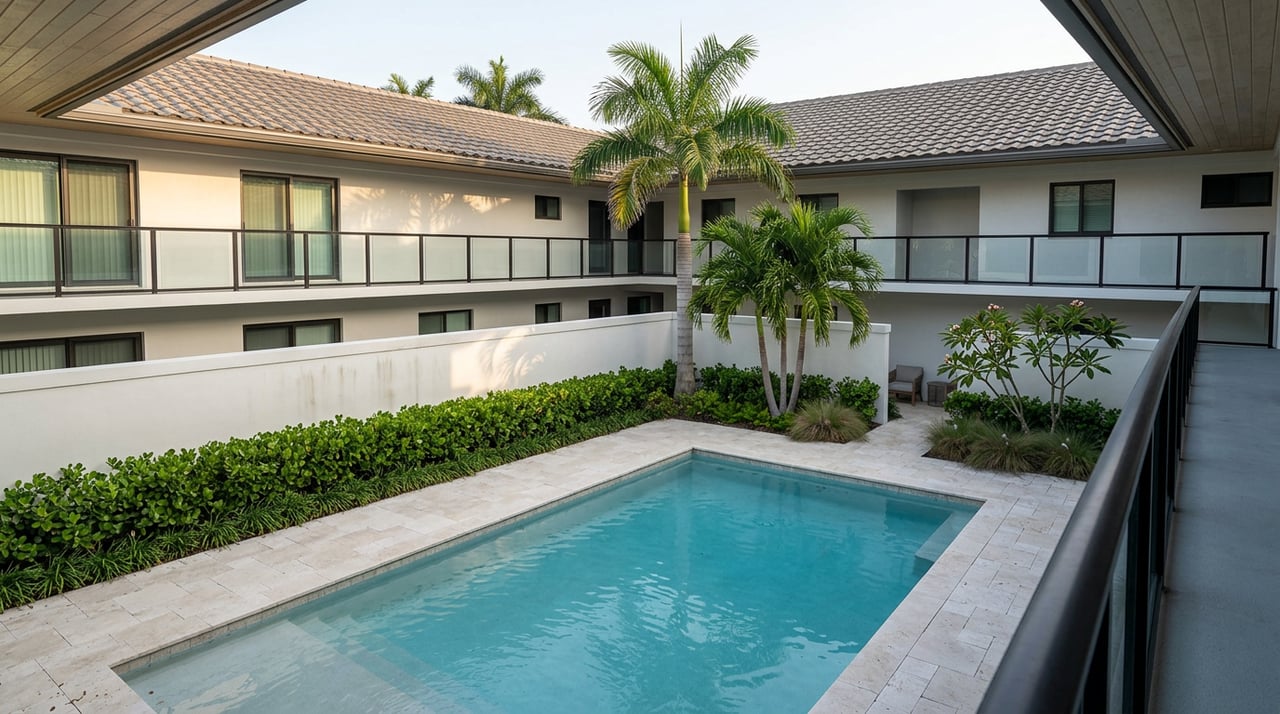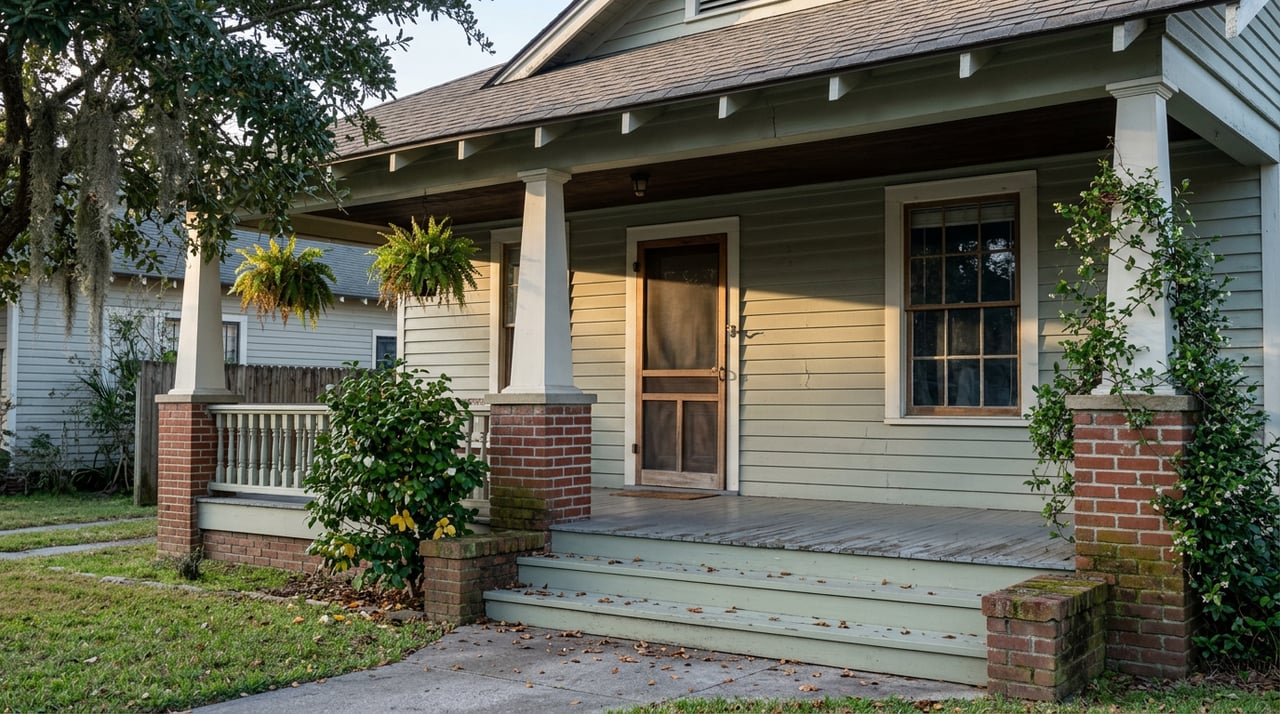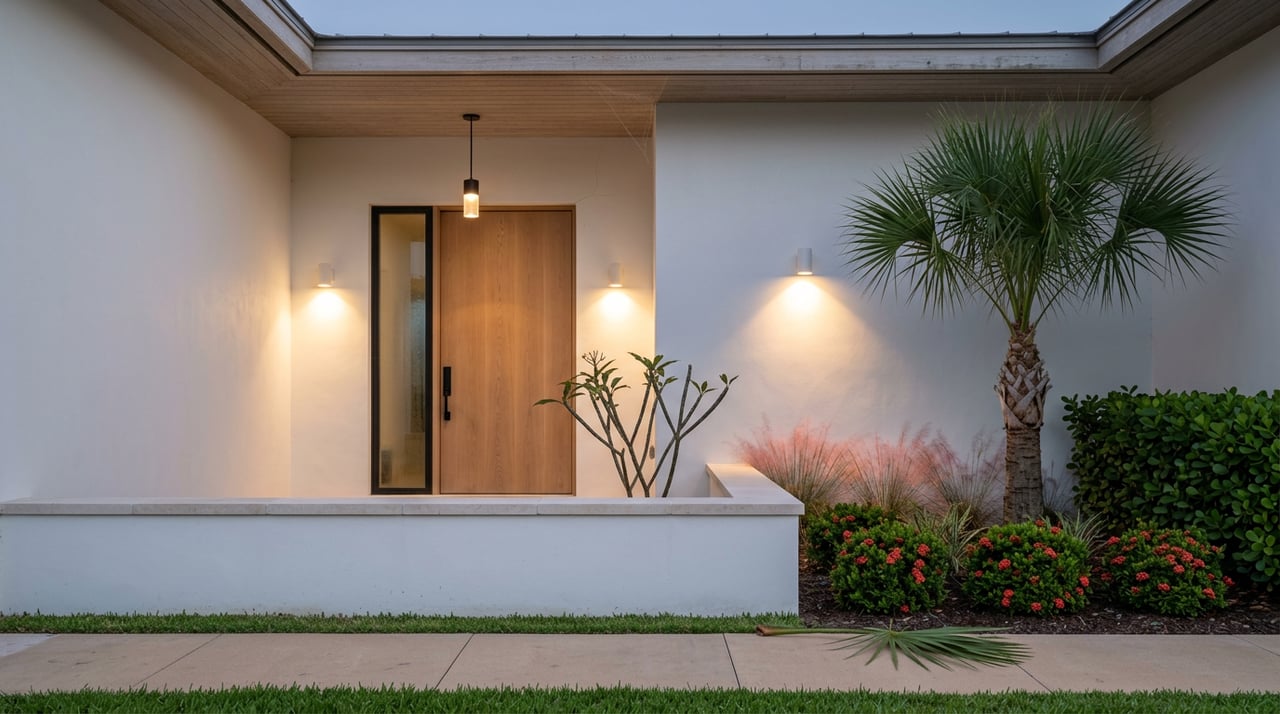
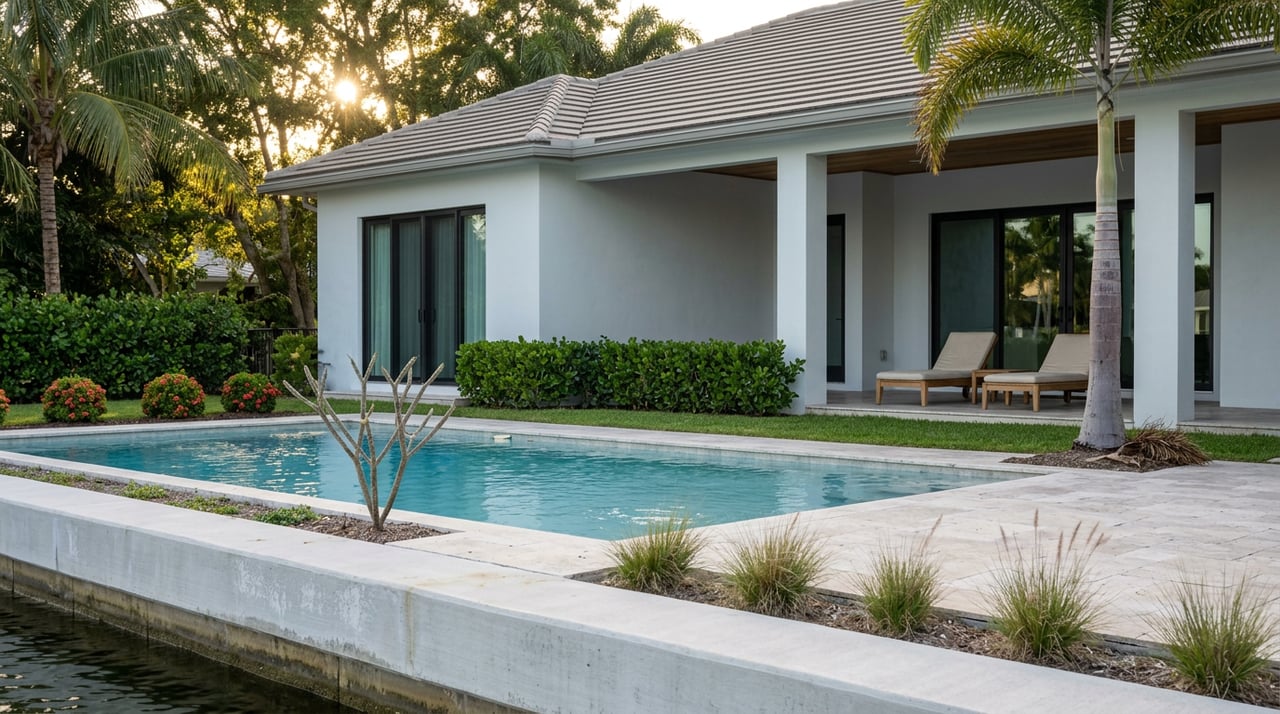
A marine engineer is on the seawall with a probe and a notepad. Twenty feet away, a listing photographer is setting up a drone shot of the dock, waiting for the tide to drop so the pilings read cleaner in the frame. Both are working the same property, on the same afternoon, for opposite reasons. One is documenting what the home actually is. The other is documenting what it looks like. On Sarasota's waterfront, the seller who understands which of those two visits matters more is the one who controls the price conversation before a buyer ever schedules a showing.
That is the part most sellers get backward. A seawall problem is treated as something to fix if an inspector finds it, a line item to negotiate if a buyer asks. In practice, on Bird Key, Siesta Key, Longboat Key, Casey Key, and the canal-front streets around Osprey Avenue and Nokomis, the seawall and dock file is doing pricing work long before any inspection contingency opens. Buyers in this market have learned to sort listings into two mental categories the moment they see the photos, and which category you land in decides who calls, what they offer, and how much room they think they have to negotiate.
The two buckets buyers already carry in their heads
Anyone shopping Bird Key inventory for more than a week starts to see the same pattern. One set of listings is a single-story home from the 1960s or 70s, often sitting below current base flood elevation, with a dock and seawall that predate most of the neighborhood's rebuilding wave. Buyers touring that home are not underwriting the house. They are underwriting a teardown or a full renovation, and the structure itself contributes almost nothing to what they are willing to pay. The lot is the asset.
The other set is a rebuilt or recently renovated estate, elevated to current standards, with a documented dock and a seawall that has either been replaced or recently inspected. Buyers touring that home are paying for a finished product, and they expect the marine infrastructure to already be sorted.
The problem shows up when a home sits in between: a structure that has been updated inside but never proven out on the water side. Without a documented seawall and permit history, a buyer's agent has no way to tell if that listing belongs in the first bucket or the second, so the default assumption trends conservative. A home that could have priced as turnkey ends up evaluated as a project, because nothing in the listing file said otherwise.
This is not unique to Bird Key. The same split shows up on canal-front streets in Osprey, Nokomis, and Venice, where older docks and seawalls have gone through decades of boat wakes, saltwater, and storm exposure without a clear paper trail proving what has and hasn't been repaired.
What actually happens when a marine engineer walks your seawall
A standard home inspection does not cover marine infrastructure. That is a separate scope, usually run by a licensed marine contractor or structural engineer, and it looks at specific failure points a general inspector will not evaluate:
- Panel condition: cracking, spalling, or bowing in the vertical face of the wall, which is typically the first visible sign of trouble
- Tie-backs and deadmen: the rods and buried anchors that hold the wall in place against the upland soil, invisible from the yard but critical to structural integrity
- Cap displacement: shifting or separation at the top edge of the wall, which often signals movement below the waterline before it shows up above it
- Dock and boat lift condition tied to the same permit history as the seawall itself
Sarasota's Gulf Coast environment accelerates all of this. Salt water, boat wakes, and constant sun exposure mean a hairline crack can become a structural problem within a couple of years rather than a couple of decades. A seawall repair currently runs somewhere between $100 and $250 per linear foot as of mid-2026, which on a typical waterfront lot is a manageable number if it is caught early and priced into the listing. Left undocumented until a buyer's inspector finds it during the contract period, that same repair becomes a credit negotiation, and buyers routinely ask for more than the actual cost of the work because uncertainty gets priced in alongside the repair itself.
The permit file is part of the price, not a formality
Sarasota waterfront properties typically carry four separate permits tied to marine work: a local dock or building permit, a boat lift permit, a seawall repair or replacement permit, and state-level authorization from either the Florida Department of Environmental Protection or the U.S. Army Corps of Engineers, depending on the scope of the work. Jurisdiction matters here. Bird Key, Lido Key, and St. Armands Circle fall under City of Sarasota review, while Casey Key, most Siesta Key canals, and the mainland waterways fall under Sarasota County.
The detail that catches sellers off guard is what happens when a permit was pulled but never formally closed out. Under state and local rules, that unfinished obligation transfers with the property. A new owner inherits the requirement to complete the final inspection or remediate the work, which means an open permit on a decade-old dock repair is not the previous contractor's problem anymore. It is whoever holds the deed. This kind of gap shows up more often than sellers expect on older docks in established canal neighborhoods, where a repair from fifteen or twenty years ago was completed but the paperwork was never closed at the county or city building department.
Florida law also puts a real disclosure obligation on sellers here. Under the state's Johnson v. Davis doctrine, sellers must disclose known material defects that are not readily observable and that affect a property's value, and that standard applies directly to seawall condition, prior storm damage, and unresolved permits. A seller who lists without pulling that history is not just risking a renegotiation. They are risking a disclosure problem that can follow the transaction past closing.
The seawall doesn't lie, even when the listing photos do. A cracked cap or a sinking dock post shows up in an inspection report whether or not it showed up in the marketing.
Where FEMA's elevation rule enters the pricing conversation
For homes built before current flood standards, especially the 1960s and 70s inventory scattered across Bird Key and similar barrier island neighborhoods, elevation status becomes part of the same bucket-one, bucket-two sorting buyers are already doing. Florida's substantial improvement rule, tied to the National Flood Insurance Program, means that once renovation costs on a non-conforming structure reach 50 percent of the building's market value, the entire structure has to be brought up to current flood elevation standards. Sarasota County and the City of Sarasota both track cumulative permitted work over a multi-year window specifically to prevent someone from phasing renovations to dodge that threshold, which the Sarasota County Property Appraiser's office lays out in detail.
That single number, 50 percent, is often the line between a home that reads as a straightforward renovation candidate and one that reads as a teardown. A non-elevated structure with an undocumented seawall gets treated by the market as the riskier version of bucket one. The same structure with a documented, recent seawall repair and clear permit history at least gives a buyer's agent room to argue it belongs closer to bucket two, even before elevation is addressed.
| Signal | Undocumented (Bucket One default) | Documented (Bucket Two candidate) |
|---|---|---|
| Seawall history | Unknown condition, no recent inspection | Recent marine engineer report on file |
| Permit status | Open or unverified permits | Closed permits with final inspection recorded |
| Elevation status | Assumed non-conforming, unaddressed | Elevation certificate on file, status confirmed |
| Buyer's working assumption | Priced toward lot value | Priced toward finished product |
What this changes about your listing sequence
Sarasota's waterfront market is stabilizing rather than surging heading into the fall of 2026, with well-priced listings on Siesta Key and Longboat Key running in the four to six month supply range and closing in roughly 45 to 60 days. In a market with that much room, buyers have the time and the leverage to ask hard questions before they write an offer, not after. That makes the sequence of a seawall inspection matter more than it would in a faster market.
The practical version of this looks like: order the marine inspection and pull the permit history before the photographer shows up, not after an offer comes in. A standard residential dock or seawall repair on an artificial canal often qualifies for a Florida Department of Environmental Protection Letter of Authorization rather than a full Environmental Resource Permit, which cuts the state-level review down to four to eight weeks instead of a longer environmental review timeline. Building that lead time into your pre-listing schedule means any repair or permit cleanup is resolved, or at minimum priced and disclosed, before the first showing rather than surfacing during a buyer's ten to fifteen day inspection window under the standard Florida contract.
FAQ
Does a seawall issue automatically end a sale in Sarasota? No. A documented issue with a repair estimate attached is a negotiation point. An undocumented issue discovered by the buyer's inspector during the contract period tends to produce a larger credit request, because the buyer is pricing in the uncertainty along with the repair.
Who is responsible if a past permit was never closed out? The obligation transfers with the property. A new owner can inherit the requirement to complete a final inspection or remediate unpermitted work, regardless of when the original repair happened.
Do I need a marine inspection if the seawall looks fine from the yard? Most of the failure points, including tie-backs, deadmen anchors, and early panel cracking, are not visible from a casual walk of the property. A standard home inspection does not cover marine infrastructure at all.
Does a non-elevated older home have to be priced as a teardown? Not automatically. Elevation status is one input among several. A documented seawall history and clean permit file can support a stronger price position even before elevation is addressed, because it removes uncertainty from the buyer's side of the calculation.
If you are weighing whether to list a waterfront property in Sarasota this fall, the seawall and permit conversation is worth having before the photographer, not after the first showing. Build With Bri works through that sequencing with sellers across Sarasota's waterfront neighborhoods, from Bird Key to the canal streets off Osprey Avenue. Let's Connect to talk through what your specific property's file should look like before it goes live.